With AI Driving Up Energy Costs, Commercial and Industrial Companies Have a Narrow Window to Act

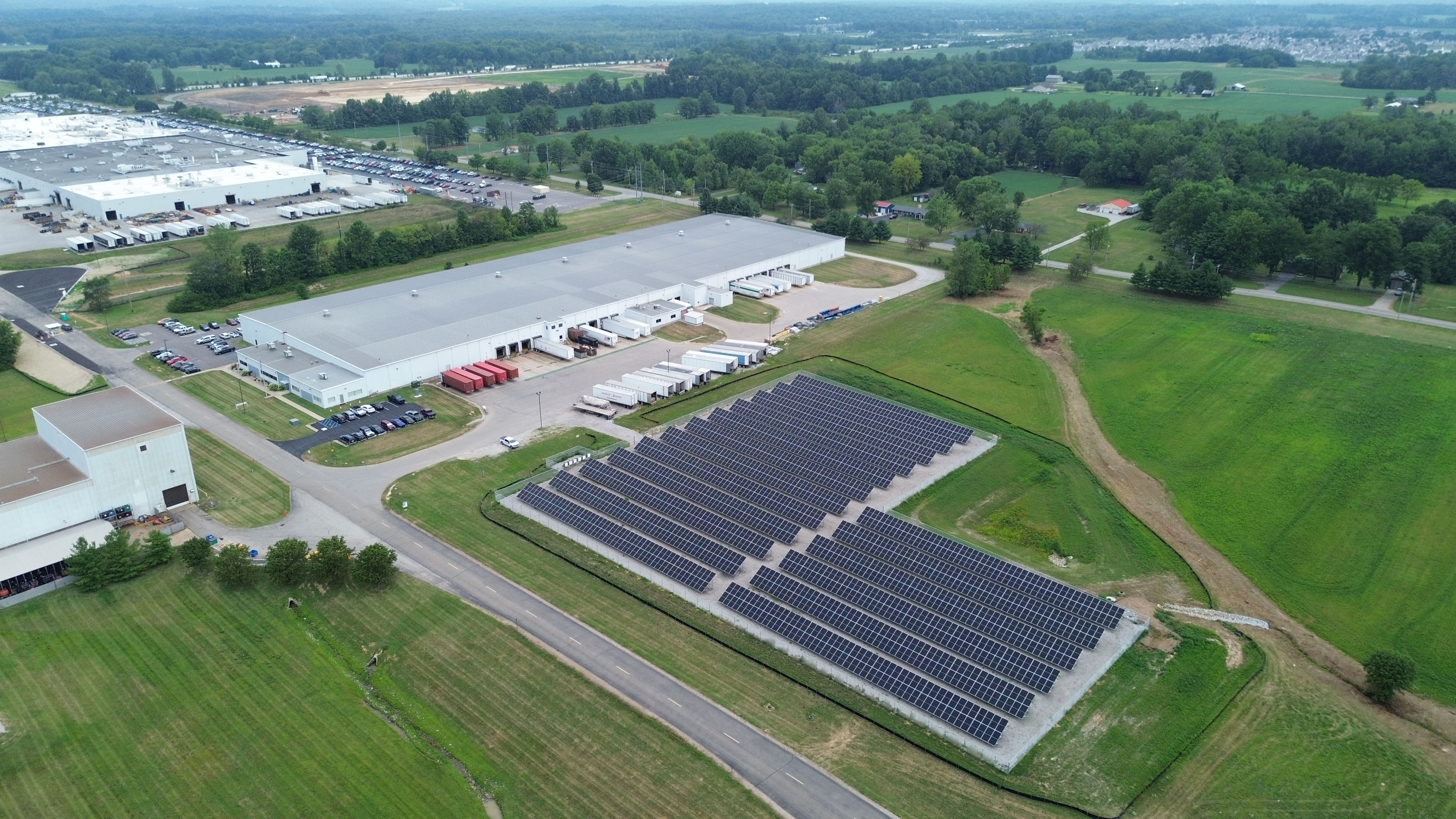
Midwest and Rust Belt industrial operators are now facing historic electricity price spikes, which are driven by AI data center load. According to the Institute for Energy Economics and Financial Analysis (IEEFA), PJM capacity prices jumped from $28.92 per megawatt-day in 2024 to $329.17/MW-day in 2026. This grid strain is hitting the factory floor directly: industrial electricity rates have climbed 26% in Ohio and 31% in Pennsylvania year-over-year, compared to just 7% nationally, according to Reuters and U.S. Department of Energy data.
PJM's Load Forecast Report from January 2026 also shows that net energy load growth is projected to average 5.3% per year over the next decade and 3.4% over the next two decades, with Goldman Sachs projecting data centers will drive 40% of that overall demand growth. Reinforcing this strain, PJM's independent market monitor attributes over $23 billion in customer capacity cost increases through 2028 primarily to data center load additions.
Compounded with other pressures such as tariffs, inflation, and carbon-reduction targets, rising electricity costs place even more of a burden on commercial and industrial companies, making electricity exposure a strategic issue instead of just an operating expense.
Not only are manufacturing electricity costs on an upward trajectory, but the window for using federal clean-energy incentives is also becoming more complicated.
The 30% Federal Commercial Solar Investment Tax Credit Is Permanently Expiring Soon
The Clean Electricity Investment Credit replaced the Energy Investment Tax Credit, which was phased out at the end of 2024. This tax credit gives a base credit of 6% and up to 30% of project costs (more with bonus adders). It also has a 100% bonus depreciation that allows a first-year deduction of the full depreciable basis; these two benefits allow major projects to recover 40-50% (or more) of their costs through tax treatments.
The One Big Beautiful Bill Act was signed on July 4, 2025, and Section 48E phased out even more clean energy tax credits. According to these new rules, companies that began construction on solar projects before July 4, 2026 benefit from a 30% federal solar tax, so long as the projects are completed within four years.
With the July 4, 2026 begin-construction safe harbor now behind us, the statutory rules under Section 48E are unyielding: the 30% federal commercial solar investment tax credit expires permanently for any project not fully placed in service by December 31, 2027. The projects must be fully installed, interconnected, and operational, not contracted or under construction. While there are no phase-down, partial credits, or extension paths, the 100% bonus depreciation survives after 2027, whereas the ITC does not. This indicates that C&I projects can still benefit from tax credits, so long as they meet the deadline.
The Hidden Commercial Solar Tax Credit Deadline Companies Face
Because companies can still benefit from the tax credit bonus depreciation, the 2026 decision window is especially consequential. What's not immediately obvious is operational lag, and this makes ITC 2027 a project delivery issue, not just a tax calendar one.
In general, commercial solar projects need anywhere between six and 15 months, as the process involves an extensive project development process involving capital approval, engineering, permitting, procurement, utility interconnection, construction, commissioning, and final Permission to Operate (PTO). Companies that want to capture the credit for 2027 and still deliver a project qualifying for it must therefore complete the corporate budget approval cycle by Q4 2026. In most cases, waiting for 2027 budget cycles can cause companies to miss the window without even knowing it.
Solar Energy Can Shift the Conversation From Electricity Exposure to Energy Strategy
According to the Founder and CEO of Emergent Solar Energy, a commercial and industrial solar EPC serving manufacturing, heavy industrial, municipal, and agricultural customers, behind-the-meter on-site solar systems can control utility costs and lock in balance-sheet savings. A properly evaluated system can be sized for a facility's specific needs, and companies such as Emergent Solar Energy can cover areas such as energy use analysis, projected savings, incentives, design and engineering, permitting, installation, and ongoing monitoring.
Because manufacturers and industrial companies must make disciplined capital decisions, a focus on solar solutions can help with budget stability. A thorough C&I process can enable solar to compete for capital alongside other infrastructure instead of existing as a separate sustainability budget. If used in a timely fashion, the 30% federal commercial solar investment tax credit can also help with project economics.
The 2026 Capital Cycle Could Define Industrial Energy Decisions for Years
PJM's 2027/2028 base residual auction report shows that it reached a record $333.44/MW-day, but failed to meet the region's reliability requirement by 6,516.6 MW. This indicates that AI infrastructure isn't something temporary; grids must adapt and adjust to accommodate such demand.
Midwest and Rust Belt manufacturers must also evolve their energy strategies to address pressure coming from different areas. While previously, the dilemma was whether solar would deliver an attractive return, modern concerns now regard whether companies want to remain entirely dependent on grids that are being reshaped by the biggest electricity consumers in the economy.
These companies now have the chance to treat energy infrastructure as a long-term manufacturing asset instead of a one-off financial benefit. By planning ahead, they can make use of the commercial solar tax credit before it's completely phased out.
related resources
view all resources
How Indiana manufacturers use rooftop solar to control energy costs and Scope 2 emissions, and what determines whether a plant's roof qualifies.

WEST LAFAYETTE, Ind. – A Purdue University alumnus is using clean, solar energy to drastically reduce the electric bill for his northern Indiana hog farm with the help of a company based in...

Emergent Solar Energy is proud to announce that our work has been featured in several nationally respected news sources, including PV Magazine, Solar Professional Magazine, PHYS.ORG, National Hog...

Join Hundreds of Indiana Businesses
Unlocking Affordable Solar Energy
Cut energy costs and build independence from the grid with solar from Indiana’s C&I solar specialists. Tell us what you need and we’ll be in touch about a quote ASAP:
request a call