Indiana Heavy Manufacturing Turns To Rooftop Solar To Cut Costs And Carbon

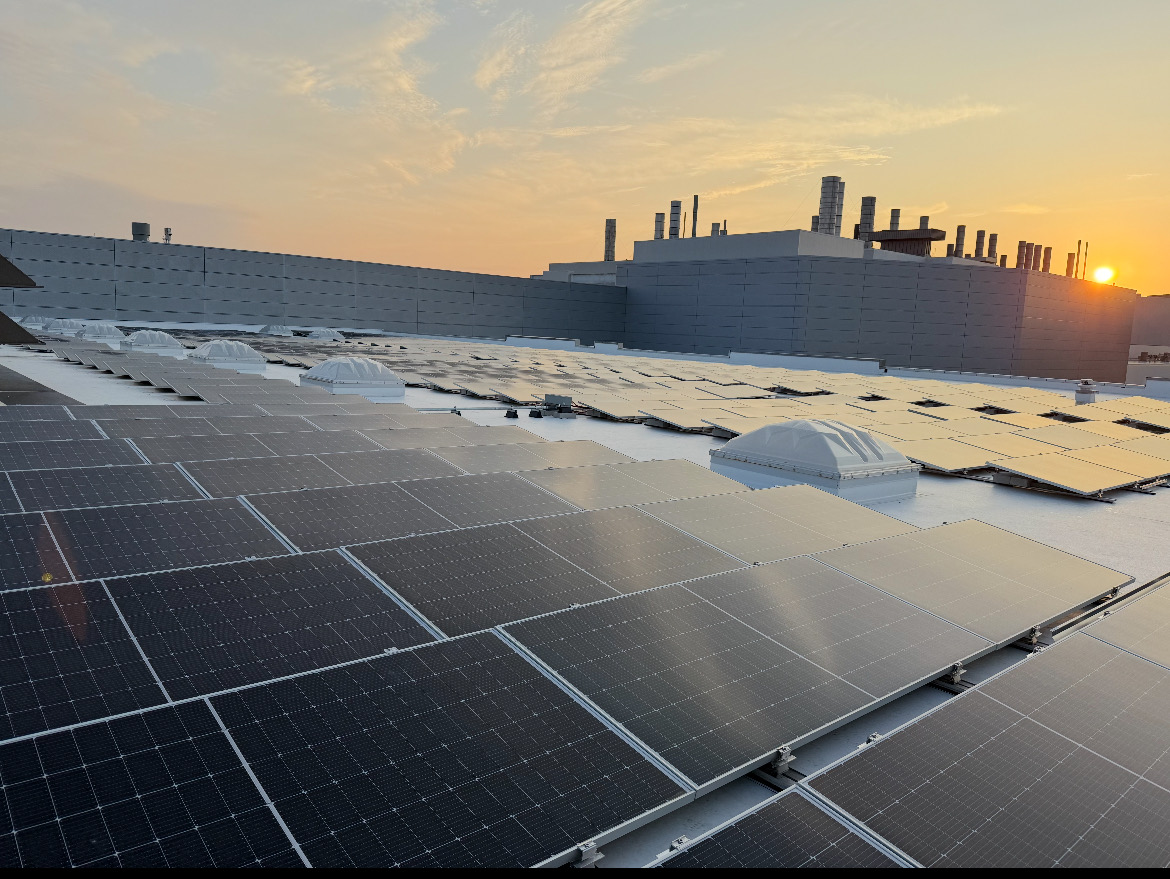
Electricity is no longer a fixed overhead line for manufacturers. As Deloitte notes in Boosting Industrial Manufacturing Capacity for the Energy Transition, the sector is under sustained pressure to reduce its reliance on fossil fuels, for cost control as much as for carbon reduction. For heavy manufacturing facilities managing multi-megawatt load profiles, that pressure now shows up directly on the utility bill: rising demand charges, capacity cost pass-throughs, and successive rate increases across Indiana's utilities and the surrounding region.
The supply side of the equation moved the other direction. According to the Solar Energy Industries Association (SEIA), the cost to install solar has dropped by more than 40% over the last decade, and panel prices themselves have dropped by 99% over the past 50 years. For an industrial facility with 50,000 or more square feet of roof, those two lines have crossed: on-site generation stopped being a sustainability initiative and became an operating cost decision that competes for capital on its own numbers.
This article lays out how that decision actually gets made on a heavy manufacturing facility: the economics driving adoption, the structural and electrical work that determines whether a roof qualifies, and the federal incentive deadline that now controls project timing.
Why Heavy Manufacturing Is Moving to Rooftop Solar
The industrial segment is on its own trajectory, separate from the residential market. While McKinsey & Company notes a flattening in residential installations after a prior surge, commercial and industrial adoption has continued to build, and Grand View Research's Rooftop Solar PV Market Summary identifies the industrial segment as a leading driver of rooftop market growth. Three factors explain it:
Exposure to demand charges and rate volatility. Manufacturing plants carry large, continuous electrical loads. A behind-the-meter array offsets purchased kilowatt-hours at the plant's own retail rate and reduces exposure to peak-demand pricing. The generation asset on the roof converts part of a volatile operating expense into a fixed, depreciating capital asset with a known output curve.
Federal tax treatment. The Investment Tax Credit (ITC) and Production Tax Credit (PTC) remain the primary financial drivers of commercial solar. The Congressional Budget Office, in its Business Tax Credits for Wind and Solar Power Report, estimates that without these subsidies, renewable energy spending would be roughly 33% lower. Combined with 100% bonus depreciation, the federal tax treatment allows a qualifying project to recover a substantial share of its cost in the early years of ownership.
Scope 2 reporting pressure. Manufacturers face growing requirements, from customers as much as regulators, to report and reduce Scope 2 emissions associated with purchased electricity. On-site generation reduces purchased kilowatt-hours directly, which makes it one of the few decarbonization measures that lowers the utility bill and the emissions inventory with the same capital dollar.
What This Looks Like on a Manufacturing Roof
The pattern is visible on plants in service today. At Subaru of Indiana Automotive in Lafayette, Emergent Solar Energy delivered a 204 kWp rooftop array at the automaker's production plant, expanding the facility's on-site renewable generation.
"The expansion rooftop project completed by Emergent Solar Energy further demonstrates an ongoing commitment to reduce our environmental impact. By expanding the use of renewable energy at our facility, we continue to embrace sustainable technology to help offset our carbon footprint."
- Scott Brand, President and Chief Operating Officer, Subaru of Indiana Automotive
In Springfield, Ohio, Emergent completed a 953 kWp rooftop system for Cascade Corporation, a Tier 1 supplier to Toyota Material Handling. The project put nearly a megawatt of generation on the roof of a working forklift-attachment manufacturing plant, with construction sequenced around the plant's operating schedule.
That last point matters more than any panel specification. Across 42 commercial and industrial projects in service, Emergent has recorded zero unplanned production interruptions during construction. That record is not an accident; it is the product of scheduling installation work around the plant's operating calendar, including weekend work when the sequence requires it, and of the fact that all installation work happens on the roof and grounds, never inside the plant. Every project is delivered under a single EPC contract with Emergent as the contractor of record, carrying engineering, procurement, construction, the utility interconnection through an executed agreement, and commissioning under one responsible party.
What Determines Whether a Roof Qualifies
Not every industrial roof is a candidate, and the qualification work is where a rooftop project is won or lost. Four factors decide it.
Structural capacity
Many manufacturing buildings were designed decades before rooftop equipment was standardized. According to the NREL Solar Ready Buildings Guide, a standard PV array adds a static dead load of 3-6 pounds per square foot, and the structural review has to confirm the building carries it with margin. Roof age drives the sequencing decision: if the membrane is approaching its replacement cycle, it is almost always more prudent to address the roof first than to install panels and remove them later. On rooftop work, coordination with the roof manufacturer to preserve the roof warranty is part of the project scope, not an afterthought.
Layout and drainage
Flat industrial roofs offer flexibility on mounting and orientation, but they demand careful drainage planning so water never pools under or around mounting hardware. Obstructions set the real usable area: vents, ducts, skylights, and rooftop mechanical units interrupt the array layout and reduce total capacity, which is why capacity estimates from satellite imagery often overstate what a roof will actually hold.
Electrical integration
A megawatt-scale array has to land somewhere. Under National Electric Code (NEC) Article 690, disconnects must be "readily accessible," which can require reorganizing electrical rooms or upgrading main switchgear to handle the backfeed. The utility side runs in parallel: the interconnection application, study, and executed interconnection agreement sit inside the EPC scope on every Emergent project, because a system that is built but not approved to operate produces nothing.
Access and safety
The system will be maintained for decades, and crews have to reach it without interrupting production or compromising worker safety. That often means permanent walkways and guardrails designed to comply with OSHA standard 1910 for walking-working surfaces, engineered into the layout from the start rather than added after the fact.
The Incentive Clock Is Now Part of the Project Schedule
The federal incentive landscape changed in 2025, and the change replaced open-ended availability with a fixed deadline. Under current law, the 30% federal commercial solar investment tax credit generally requires a project to be placed in service, fully installed, interconnected, and operating, by December 31, 2027. The begin-construction safe harbor closed on July 4, 2026. The 100% bonus depreciation survives beyond that date; the ITC does not.
Because a commercial solar project typically needs six to 15 months from capital approval through engineering, permitting, procurement, interconnection, construction, and permission to operate, the practical decision window closes well before the statutory one. For most manufacturers, Q4 2026 is the last realistic capital-planning cycle for a project that intends to capture the 30% commercial solar tax credit. Eligibility depends on each company's tax position; project timing decisions should be made with your tax advisor.
Technical review current as of September 2026.
How a Facility Gets Evaluated
The screening threshold is simple: a facility with peak demand above 150 kW or annual consumption above 500,000 kWh warrants a feasibility analysis. Below that, the economics rarely justify a project of this class; above it, the question is worth answering with real numbers.
Emergent's analysis is built from the facility's own 15-minute interval data, utility tariff, and load profile, modeled on industry-standard platforms across a 30-year economic life covering the full set of value streams: the investment tax credit, bonus depreciation, SRECs, utility export metering, and energy offset savings. A proposal can show attractive tax benefits; what a capital project committee needs is a model it can defend in review.
"They managed the entire solar project from start to finish: financial modeling, permitting, utility interconnection, and on-site installation. One point of contact throughout. The system has been performing better than anticipated, and the financial returns are tracking exactly as projected."
- Nathan Sweeney, Facilities Manager, Toyota Material Handling
Feasibility analyses are completed within 15 business days at no cost or obligation. For a manufacturer weighing the decision against the 2027 deadline, the earliest step is also the cheapest one: find out whether the facility qualifies. Start with the commercial and industrial solar overview, or request a feasibility analysis directly.
related resources
view all resources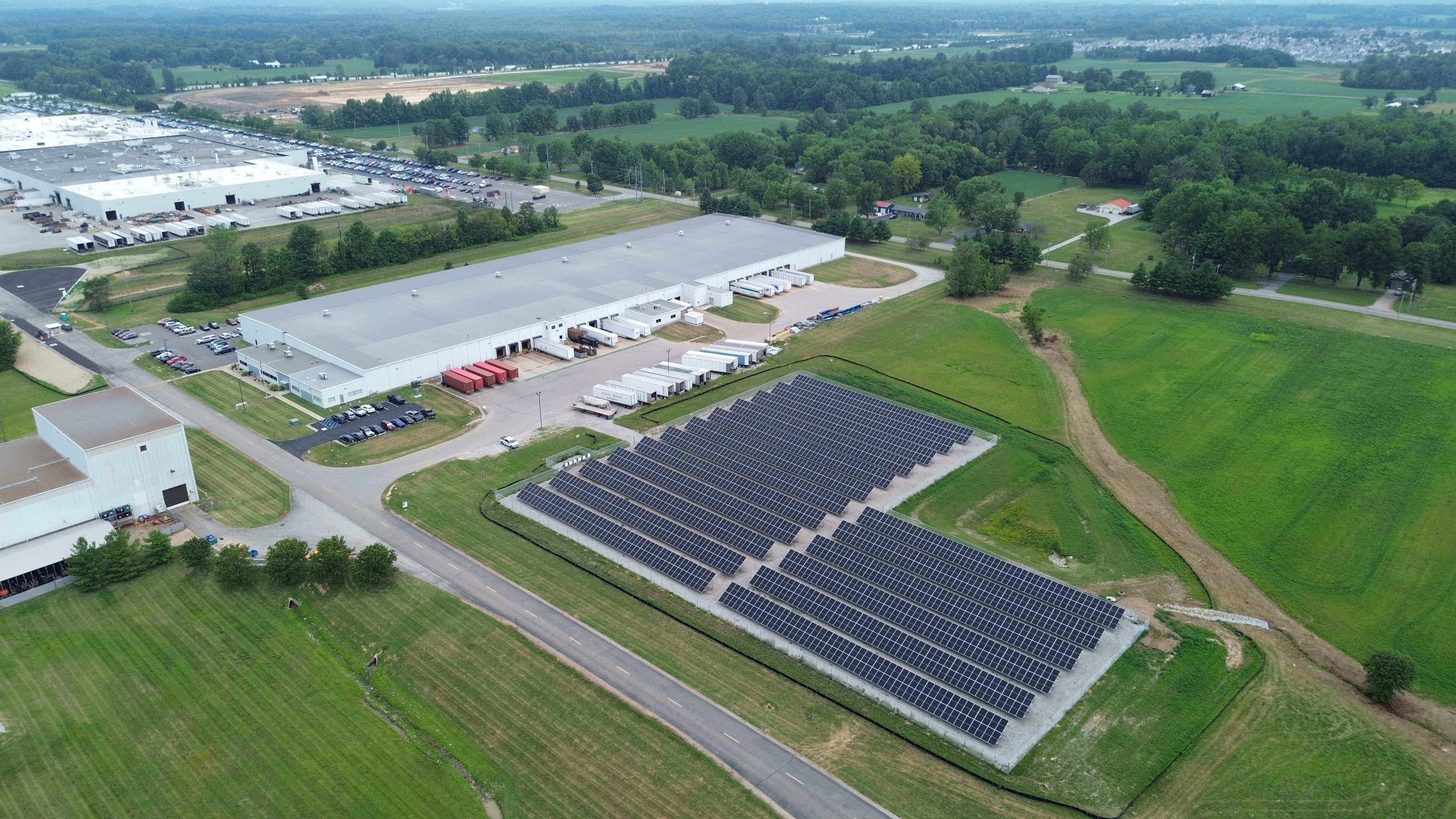
Commercial and industrial companies face two pressing issues: rising electricity costs and a small window to claim clean energy tax credits.

WEST LAFAYETTE, Ind. – A Purdue University alumnus is using clean, solar energy to drastically reduce the electric bill for his northern Indiana hog farm with the help of a company based in...

Emergent Solar Energy is proud to announce that our work has been featured in several nationally respected news sources, including PV Magazine, Solar Professional Magazine, PHYS.ORG, National Hog...

Join Hundreds of Indiana Businesses
Unlocking Affordable Solar Energy
Cut energy costs and build independence from the grid with solar from Indiana’s C&I solar specialists. Tell us what you need and we’ll be in touch about a quote ASAP:
request a call